Global economies show growing emissions decoupling

17/12/2025
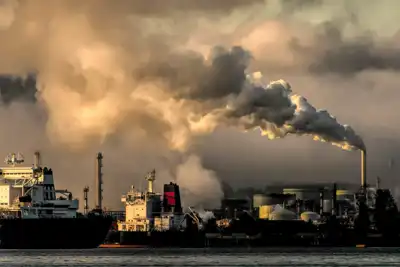
Global economies show growing emissions decoupling

A new analysis marking ten years since the Paris climate agreement shows that a growing share of the world economy is now expanding while reducing or slowing carbon emissions, signalling a shift in how economic growth and climate impact interact.

The 10 Years Post-Paris: How emissions decoupling has progressed globally report finds that countries responsible for 92?% of global GDP and 89?% of CO2 emissions have achieved either relative or absolute decoupling of emissions from growth, up from around 77?% before the Paris agreement.

Absolute decoupling, where emissions fall as economies expand, now characterises a larger number of countries than in the pre-Paris decade. The analysis uses the latest 2025 Global Carbon Budget data covering 113 economies and highlights that while global CO2 emissions continue to rise overall, the decoupling trend is becoming more widespread.

Dr Kerry Senior, secretary of the International Council of Tanners, noted that “while consumption and emissions are still rising, there is clearly a will for change. Leather must play its part in the circular bioeconomy, innovating to minimise waste, replace outdated chemistry, and demonstrate its value as a renewable, biodegradable product.”

The findings suggest that structural shifts in energy and industry may help align economic development with climate targets in the years ahead.


Photo by Chris LeBoutillier on Unsplash