










Credible pathways
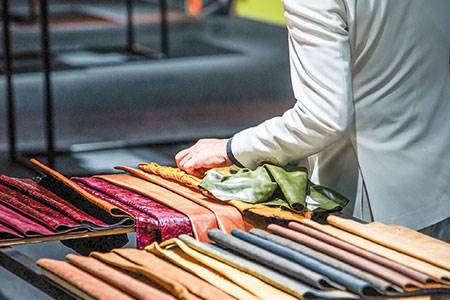
Non-profit organisation the Institute for Data Integrity is being launched because transparent data, and analysis of that data, are now a necessity for the global leather industry.
Industry body Leather and Hide Council of America (L&HCA) has launched a new platform that it says will serve as an independent, science-based source of data for use in lifecycle assessment (LCA) exercises.
The platform will be called the Institute for Data Integrity (IDI). It will be dedicated to helping companies in the global leather supply chain collect and analyse data (from livestock production, tanning and beyond) for use in LCA studies. It will aim to establish a “global reference for leather LCAs”, and accelerate what it calls “credible decarbonisation pathways”. IDI will be registered in the US as a non-profit organisation, but will serve the industry globally, attempting to close “critical data gaps” that it says exist in current assessment methodologies for leather and other natural materials.
“The leather sector, and natural products generally, need a trusted source for LCA data that is scientifically rigorous and transparent,” says L&HCA vice-president, Kevin Latner, about the new institute. “IDI will enable robust comparisons with alternative materials, support compliance with methodologies such as the EU product environmental footprint, and provide brands with the tools they need to make informed decisions.”
Ideas board
Secretary of the International Council of Tanners, Dr Kerry Senior, and the executive director of the US Roundtable for Sustainable Beef, Dr Samantha Werth, will be among the directors of IDI. Dr Greg Thoma of Colorado State University will also sit on the board. Dr Thoma says the new platform will be committed to offering “practical, science-first tools”. He adds that IDI’s work will align with ISO standards. It will also publish open methodologies, which will allow the non-profit to “drive environmental data transparency in the materials sector”.
Greg Thoma is the director of agricultural modelling and lifecycle assessment at Colorado State. He was the lead author of a study that L&HCA commissioned two years ago into the carbon footprint of making leather from US cow hides. He has worked on projects with the US Department of Agriculture for more than a decade.
For her part, Samantha Werth combines her role at the US Roundtable for Sustainable Beef with being the senior director for sustainability at non-profit organisation the National Cattlemen’s Beef Association. She completed her PhD in animal biology at the University of California, Davis, in 2021. She worked there with prominent animal science and air-quality expert Professor Frank Mitloehner.
A specialist in environmental and raw materials issues, Kerry Senior became secretary of the International Council of Tanners in 2020. Since 2013, he has been the director of industry body Leather UK. Earlier in his career he worked at BLC Leather Technology Centre.
Out there
What Kevin Latner has told World Leather is that the idea behind IDI is to “set the direction for lifecycle assessments, create a place for data and set an entry point for scientists, LCA specialists or companies to upload their data for comparison”. He says this will involve transparent data, transparent methodologies and protection for the data that comes into the new platform that IDI will build.
Mr Latner continues: “We need a baseline, and to be able to say what our baseline is. People involved in this launch recently met one of the automotive groups that have said they no longer want to use leather. What came out of that discussion was that the automotive company was using data from 2010.”
Yes, you can say the automotive company should be using better data, but the L&HCA vice-president has some sympathy. If you look on the internet or ask an artificial intelligence tool, he says you will find that there is no better data at the moment. “If the data exists, it is hidden behind paywalls and it may not have been independently verified or be compliant with ISO standards,” he points out. “We are going to put the data out there.”
Forward planning
IDI has said brands, consumer groups and anti-greenwashing regulations make “transparent, defensible data and analysis” a requirement. It will spend the rest of 2025 finalising the make-up of an advisory committee, establishing a methodology framework, and building a basic version of its platform.
It will aim to launch the platform in 2026 and incorporate some pilot datasets before expanding coverage to the global leather industry. It will release benchmarking tools and consumer-facing dashboards in 2027 and 2028. Brands, industry associations, researchers and philanthropic partners can all join as “founding funders and data collaborators”.
The importance of good data
The launch of IDI has come just as a different institute, Cologne-based think-tank the nova-Institute, claims to have exposed “a major underestimation” of methane emissions from oil and gas. A specialist in defossilisation and renewable carbon, the nova-Institute recently carried out analysis of updates to what it calls “leading lifecycle inventory (LCI) databases”. These databases are key sources of the information on which LCA studies are often based.
Its findings could have major implications for comparing the carbon footprints of fossil-based materials with those of natural materials, including leather. According to nova-Institute’s analysis, global methane emissions from oil production are likely to be 15 times higher than the International Association of Oil & Gas Producers (IOGP) has claimed until now. For natural gas, the institute says, emissions are up to 3.8 times higher in key producing countries than the IOGP has estimated.
It says downstream products such as polyethylene, polypropylene and polyethylene terephthalate, which are all types of plastic in widespread use in consumer products, should now carry carbon footprints that are between 20% and 30% higher than previous LCA figures have suggested. Some finished product brands use these plastics in their products and present the materials as good alternatives to leather, often claiming environmental benefits as the main reason behind their choice.
Commenting on these findings, IDI board member Dr Kerry Senior says the implications for comparisons between leather and synthetic alternatives “through the narrow lens of LCA” remain to be seen. But he adds: “It is obvious that action is needed on all methane emissions. However, it is clear that the arguments in favour of natural materials, including leather, get stronger all the time.”
The Institute for Data Integrity aims to provide a trusted source for LCA data for the leather sector.
Credit: Lineapelle















