


UNIDO sounds the call for harmony
A UNIDO project to set out new guidelines for calculating and assessing the environmental impact of leather is complete. The resulting document seeks to settle long-running disputes about the industry’s share of upstream impact and about links between durability and product carbon footprint.
The United Nations Industrial Development Organisation (UNIDO) has published comprehensive new guidelines for calculating the environmental footprint of bovine leather. It released the 119-page document in mid-June after years of work on the project. UNIDO’s industrial development officer for the global leather sector, Ivan Král, says producing the guidelines was far from easy, but that completing the task is a source of great satisfaction. He says the new guidelines are based on the work of specialist consultancy Spin 360 and its founder, Federico Brugnoli.
This project began in 2024, when UNIDO announced that it was working to create principles for carrying out assessments of leather’s environmental impact. It said its aim was to establish guidelines that all companies will be able to use in their calculations. It argued that a lack of consistency in lifecycle assessment (LCA) exercises had led to false comparisons between leather and other materials.
By the middle of 2024, UNIDO said it was ready to put these principles in front of a technical advisory group, whose members represented academia, research organisations and all parts of the global leather industry. A few months later, at that year’s autumn edition of Lineapelle, Ivan Král was in a position to share the group’s initial findings.
No quick wins
He warned then, though, that this was just the start of a much longer process and he made no apology for that. He said there would be no quick wins, adding that attempts to offer a simplified way of working out leather’s environmental impact on platforms such as the Higg Materials Sustainability Index had not worked.
Two years on from the formation of the technical advisory group, the guidelines are ready.
In the document, UNIDO explains that product environmental footprint (PEF) calculations must comply with “specific methodological requirements” if they are to be verifiable and certifiable and, therefore, earn acceptance in international markets. For this, there have to be product category rules (PCRs) in place. Leather has had a set of rules since 2018. Work on these began in 2011, led by the industry’s main representative body in the European Union, COTANCE. Partner organisations worked closely with COTANCE on this, most notably UNIC, Italy’s national tanning industry body, and Spin 360. In 2018, the leather industry PCRs the partners put together won approval from the European Commission.
This was a great achievement. It was the result of years of hard work, often in the teeth of fierce opposition from groups (some with substantial funding) that were ideologically opposed to the notion of leather presenting itself as a sustainable, renewable, circular material. However, according to the new UNIDO document, these PCRs lacked “a comprehensive and standardised methodological approach”. This has led to leather LCA calculations often proving difficult for third parties to assess, UNIDO says. Another consequence is that LCAs have not been easily comparable across products.
Explaining why this matters, UNIDO says these inconsistencies create confusion, particularly for market players that rely on LCA as a key tool for material selection. It adds: “The complexity and inherent uncertainty in environmental footprint analysis contrast with the need to communicate results in a simple, clear and unambiguous way along the value chain and, ultimately, to consumers.” It suggests that the people attempting to communicate with the public in this way may lack the expertise to assess the quality of a particular study or to understand the “methodological differences that impact results”. Or they may have the expertise but lack the time or the team-members to engage to a full enough extent with what the studies say.
This has made harmonising the rules and the way companies put them into effect in LCAs both necessary and urgent. This is what the new guidelines have set out to do.
Twenty-first century knowledge
At its core, the new document outlines and analyses “the essential requirements” for calculating the environmental footprint of leather. It also sets out recommendations for how companies embarking on LCA exercises can meet these requirements.
Underpinning this is the “significant amount of knowledge” that UNIDO says has built up in the first quarter of this century on topics that are “highly relevant” to these discussions. This means topics such as greenhouse gas emissions, climate change, carbon footprint, environmental management, environmental performance evaluation, labelling and others. UNIDO and the technical advisory group it appointed pored over publications from a range of august bodies, including the European Commission, the International Organisation for Standardisation (ISO), the European Committee for Standardisation (CEN), the Science Based Target Initiative (SBTI) and the EU-Joint Research Centre to pick out key definitions, methodologies and calculation methods. The oldest document the new guidelines quote is ISO standard 14062 for environmental management, which is from 2002. The most recent is version 5 of the general programme instructions for Environmental Products Declaration (EPD), from 2024.
Because LCA is, in so many cases, the methodology of choice for working out environmental impact, the UNIDO guidelines pay close attention to two standards, ISO 14040 and ISO 14044, that set the framework for LCA. They make it clear, for example, that LCA studies should include a definition of the goal of the exercise, the reasons for carrying out the study and who the intended audience is. For those who have engaged with LCA studies before, other familiar terms come up: the functional unit, the system boundary, the allocation procedures, and so on.
In the case of leather LCAs, UNIDO points out that some elements have a higher influence than others on the impact calculation. Therefore, the guidelines focus on eight key elements. These are the topics the organisation has sought to harmonise and consolidate into a set of clear recommendations for the industry and for those who use and buy leather.
In black and white
The first of the eight is the leather “product system”. The guidelines do not set out to cover here all types of leather from all sources. Instead, the focus is only on leather produced from the hides and skins of animals slaughtered for human food consumption. In keeping with the decades of amassed knowledge referred to above and with all the relevant literature, this leather meets the definition of a “non-determining animal by-product”.
This is important. It means leather of this kind (which is close to 100% of the output of the global tanning industry) does not affect production volume of the raw material. In other words, here we have in black and white a clear justification of the industry’s long-held position that leather is not responsible for impacts such as deforestation. Increasing leather production would do nothing to exacerbate deforestation. In the same way, outlawing all leather production (heaven forbid) would not save a single tree.
Mathematical sense
Next comes the “declared unit” or “functional unit” that LCAs should include in their calculations. “The functional unit is one of the most important elements of an LCA study,” the document says. It provides a reference point that allows participants to “normalise in a mathematical sense” input and output data. Here, the functional unit is one square-metre of finished leather or, in the particular case of soling leather, one kilo.
The guidelines invite LCA practitioners to go beyond this and give details of the type of hide or skin, the origin of the raw material, the intended use, the thickness range, the type of tanning, retanning and finishing manufacturers have used in the process of making the leather to give a more precise definition of what it is the LCA is studying. UNIDO gives an example. The material under study could be a grain-split, finished bovine leather for footwear uppers, with a thickness range of between 1.8 and 2.0 millimetres, made from US wet-salted raw hides, processed using chrome tanning, organic retanning and aniline finishing. If you asked a company what its “declared unit” was, this could be its answer.
Durability debate
LCAs have traditionally paid too little attention to how long a product will last. Here the guidelines introduce an idea that the document calls “environmental amortisation” as a response to the long-running dispute about this. It says “environmental amortisation” is a way of measuring the potential distribution of the environmental impact of producing the material over the useful life of the material itself. It argues that tracking what it calls “the transition from a negative environmental impact during manufacturing to a positive impact during usage” is essential for assessing sustainability correctly. “This takes work,” Ivan Král says, “but it is a dimension that is completely missing at the moment. Comparing only a figure for CO2-equivalent per unit is not sufficient. Including durability will change the situation. Extending a product’s life yields a greater environmental benefit than any other measure.”
UNIDO recommends that companies work this out by calculating the emissions generated during the production phase, determining the expected lifespan of the material when it goes into finished products and then dividing the first by the second. It believes this will be an important and beneficial element for companies in the leather value chain to include in their LCAs.
“This is important for transparency and for the comparison of products and materials,” it explains. “In the case of leather, very often customers do not take account of how its technical performance can benefit the environmental footprint of their products over time. This may lead to the choice of alternative materials as a substitute. These alternative materials have lower technical performance properties, which in the end means a higher environmental impact.”
Farms and abattoirs
Another of the key elements that the guidelines focus on is system boundaries. This determines which processes are to be included in the LCA and which can be left out. To cut to the chase, the big system-boundary question for leather LCAs is whether or not upstream processes on farms and in abattoirs should come into consideration. “International debate on this has been very intense, and sometimes harsh, over the past 10 or 12 years,” UNIDO says.
Which side of the debate does UNIDO come down on? It is in favour of including animal farming and animal slaughter as part of the lifecycle of leather. It draws this conclusion because of the terms for system boundaries that the ISO 14044/2006 standard lays out. The standard makes it clear that it is only permissible to delete lifecycle stages, processes, inputs or outputs if leaving them out does not significantly change the overall conclusions of the study. It also says any decision to omit these parts of the lifecycle must be clearly stated in the LCA, with the reasons and implications for their omission explained.
UNIDO’s position is clear. To miss out the livestock farming
and slaughter stages would change the overall conclusions of any study of leather and, therefore, they should feature in leather LCAs. Two points here. To include rather than exclude these upstream processes is to show commitment to transparency. If finished product manufacturers accept this and think it is fair, perhaps they will begin to ask suppliers of synthetic materials to include the upstream processes required to produce polyester, polyvinyl chloride or nylon in their LCA studies too. Secondly, leather’s share of the upstream carbon footprint, the allocation question, will be relatively small. Ivan Král shares that there was less than a full consensus on this question among peer reviewers of the guidelines. But he insists recent studies make it clear that leather’s allocation from “the farm portion” will be significantly lower than previous figures suggested. Plus, subjecting it to environmental amortisation will make it even smaller over the lifetime of long-lasting finished products, giving leather further advantages over synthetic pretenders to its place in the material mix of shoes, bags, garments, car interiors and so on.
Allocatable by-products
The guidelines go on to examine the allocation question in greater detail. UNIDO recommends an attributional rather than consequential approach. In an attributional LCA, part of the impact of a process, such as raising a herd of cattle, must be attributed to all the outputs of that process that are not waste. Hides and skins often do go to waste, but they are not, in themselves waste. They could and should nearly always be turned into leather.
Nor are hides and skins the main product, of course. Farmers raise cattle for meat and milk. Slaughterhouses process cattle because there is demand for meat. Hides are one of the by-products of this or, as the guidelines document puts it, an “allocatable by-product”. They have an economic value, they are intentionally subjected to treatments and processes to make them more usable and more valuable, and there is often a lucrative market for what they can be turned into.
In deciding exactly what allocation it recommends, UNIDO has preferred not to stick to the formula and figures in the leather industry PCRs that the European Commission approved in 2018. It says it took this decision in spite of those figures being widely adopted on a global scale. “It should not be a default value,” UNIDO says now. “It is based on data that referred only to the Netherlands. The data derived from a study carried out in 2009, with some selected sources from 2014 and 2015.”
Upstream allocation
More recent studies conducted by Spin 360 demonstrate that the allocation factors in the 2018 PCRs might not correspond to the current reality of the industry, UNIDO continues. Instead, it proposes in these guidelines a new default allocation ratio. Its calculations are based on primary data from the past four years. Specifically, the new ratio is based on 299 studies that Spin 360 carried out between 2022 and 2024. These were LCA studies on finished leather processed from adult bovine hides in 87 tanneries across 26 different countries.
The calculation involves working out the right economic allocation (EA) for the hide, which is the hide’s percentage of the total combined value of the meat and all the other allocatable by-products (including edible offal, bones and fat) that come from the slaughterhouse. You then have to work out the mass fraction (MF) of the hide, its share of the total combined mass of all these outputs. If you divide the EA by the MF, you can work out the allocation ratio.
In an LCA, UNIDO warns that companies should use data specific to their own supply chains to work these numbers out. But if they do not have this data, they can use default or generic figures.
The 2018 PCRs used a figure of 3.5% as the EA and 7% as the MF, giving an allocation ratio of 0.5. Now, UNIDO wants to replace this with the averages for mass fraction and economic allocation from the newer Spin 360 studies. These give an EA of 1.5% (the price of hides is lower now, and has been for years) and an MF of 7.33%. This gives an allocation ratio of just over 0.2.
Parting gift
Of course, the numbers will change again. UNIDO says finding ways of keeping the data up to date will be “one of the crucial next steps”. Any change in these numbers can have a major effect on the global warming potential that leather manufacturers and their customers present for leather, usually in terms of kilos of CO2-equivalent per square-metre of finished leather, the “functional unit” we refer to above. UNIDO accepts that the figures will vary. What it is calling for is for people across the industry to use the same method to work their figures out. It is calling for harmony.
There is a reflection of this in the list of names that the guidelines document includes in the acknowledgements. It is a list of the names of the members of the technical advisory group that lent its weight to this project. It reads like a roll-call of the great and the good of the global leather industry.
There have been too few occasions when so many senior figures in the industry joined forces to pull in the same direction. It is to the great credit of UNIDO and especially of Ivan Král that, on this occasion, all these voices have sung in harmony. Mr Král is preparing to leave his role at UNIDO to enjoy the rewards of retirement, which in his case will mean spending more time in the mountains of his beloved Slovakia. He has given the leather industry a valuable parting gift.
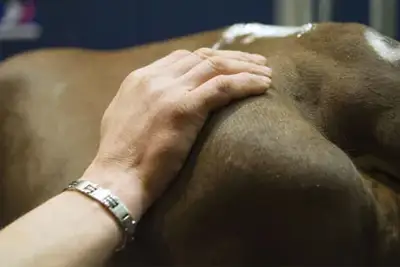
Skin in the game. The new guidelines make it clear that hides are not waste, but “allocatable by-products” of the livestock farming, meat and dairy sectors. Credit: Pascal Xicluna / agriculture.gouv.fr


